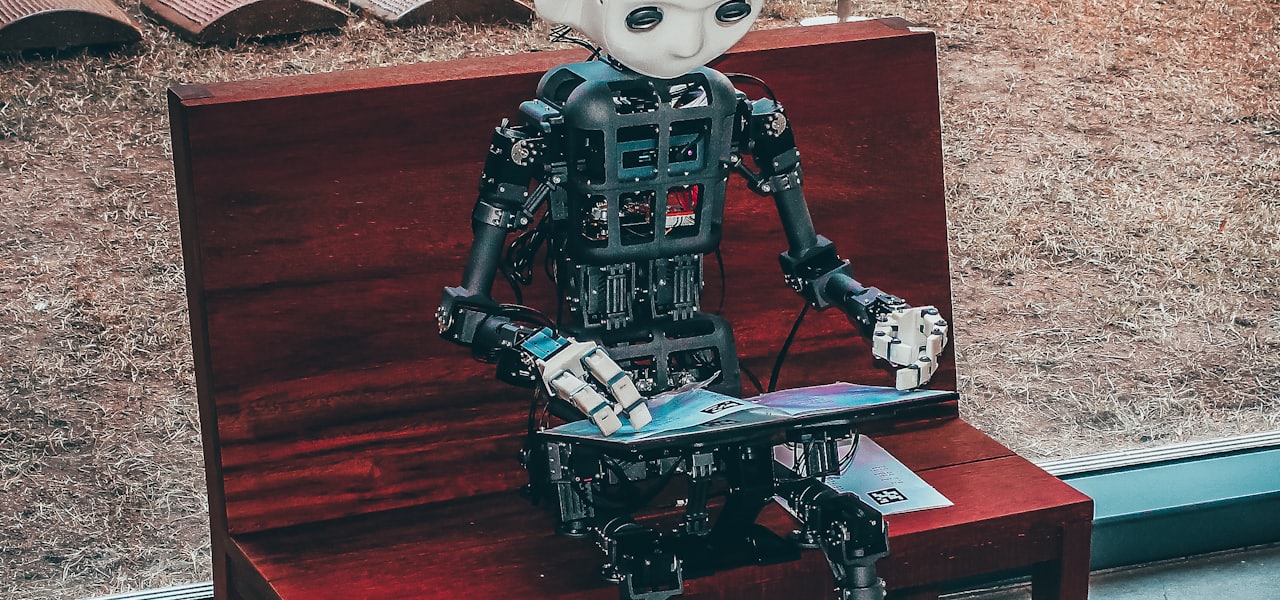
A cognitive computer is a computer that hardwires artificial intelligence and machine learning algorithms into an integrated circuit that closely reproduces the behavior of the human brain. It generally adopts a neuromorphic engineering approach. Synonyms include neuromorphic chip and cognitive chip. In 2023, IBM's proof-of-concept NorthPole chip (optimized for 2-, 4- and 8-bit precision) achieved remarkable performance in image recognition. In 2013, IBM developed Watson, a cognitive computer that uses neural networks and deep learning techniques. The following year, it developed the 2014 TrueNorth microchip architecture which is designed to be closer in structure to the human brain than the von Neumann architecture used in conventional computers. In 2017, Intel also announced its version of a cognitive chip in "Loihi, which it intended to be available to university and research labs in 2018. Intel (most notably with its Pohoiki Beach and Springs systems), Qualcomm, and others are improving neuromorphic processors steadily. == IBM TrueNorth chip == TrueNorth was a neuromorphic CMOS integrated circuit produced by IBM in 2014. It is a manycore processor network on a chip design, with 4096 cores, each one having 256 programmable simulated neurons for a total of just over a million neurons. In turn, each neuron has 256 programmable "synapses" that convey the signals between them. Hence, the total number of programmable synapses is just over 268 million (228). Its basic transistor count is 5.4 billion. In 2023 Zhejiang University and Alibaba developed Darwin a neuromorphic chip The darwin3 chip was designed around 2023 so it is fairly modern compared to IBM's TrueNorth or Intel's LoihI. === Details === Memory, computation, and communication are handled in each of the 4096 neurosynaptic cores, TrueNorth circumvents the von Neumann-architecture bottleneck and is very energy-efficient, with IBM claiming a power consumption of 70 milliwatts and a power density that is 1/10,000th of conventional microprocessors. The SyNAPSE chip operates at lower temperatures and power because it only draws power necessary for computation. Skyrmions have been proposed as models of the synapse on a chip. The neurons are emulated using a Linear-Leak Integrate-and-Fire (LLIF) model, a simplification of the leaky integrate-and-fire model. According to IBM, it does not have a clock, operates on unary numbers, and computes by counting to a maximum of 19 bits. The cores are event-driven by using both synchronous and asynchronous logic, and are interconnected through an asynchronous packet-switched mesh network on chip (NOC). IBM developed a new network to program and use TrueNorth. It included a simulator, a new programming language, an integrated programming environment, and libraries. This lack of backward compatibility with any previous technology (e.g., C++ compilers) poses serious vendor lock-in risks and other adverse consequences that may prevent it from commercialization in the future. === Research === In 2018, a cluster of TrueNorth network-linked to a master computer was used in stereo vision research that attempted to extract the depth of rapidly moving objects in a scene. == IBM NorthPole chip == In 2023, IBM released its NorthPole chip, which is a proof-of-concept for dramatically improving performance by intertwining compute with memory on-chip, thus eliminating the Von Neumann bottleneck. It blends approaches from IBM's 2014 TrueNorth system with modern hardware designs to achieve speeds about 4,000 times faster than TrueNorth. It can run ResNet-50 or Yolo-v4 image recognition tasks about 22 times faster, with 25 times less energy and 5 times less space, when compared to GPUs which use the same 12-nm node process that it was fabricated with. It includes 224 MB of RAM and 256 processor cores and can perform 2,048 operations per core per cycle at 8-bit precision, and 8,192 operations at 2-bit precision. It runs at between 25 and 425 MHz. This is an inferencing chip, but it cannot yet handle GPT-4 because of memory and accuracy limitations == Intel Loihi chip == === Pohoiki Springs === Pohoiki Springs is a system that incorporates Intel's self-learning neuromorphic chip, named Loihi, introduced in 2017, perhaps named after the Hawaiian seamount Lōʻihi. Intel claims Loihi is about 1000 times more energy efficient than general-purpose computing systems used to train neural networks. In theory, Loihi supports both machine learning training and inference on the same silicon independently of a cloud connection, and more efficiently than convolutional neural networks or deep learning neural networks. Intel points to a system for monitoring a person's heartbeat, taking readings after events such as exercise or eating, and using the chip to normalize the data and work out the ‘normal’ heartbeat. It can then spot abnormalities and deal with new events or conditions. The first iteration of the chip was made using Intel's 14 nm fabrication process and houses 128 clusters of 1,024 artificial neurons each for a total of 131,072 simulated neurons. This offers around 130 million synapses, far less than the human brain's 800 trillion synapses, and behind IBM's TrueNorth. Loihi is available for research purposes among more than 40 academic research groups as a USB form factor. In October 2019, researchers from Rutgers University published a research paper to demonstrate the energy efficiency of Intel's Loihi in solving simultaneous localization and mapping. In March 2020, Intel and Cornell University published a research paper to demonstrate the ability of Intel's Loihi to recognize different hazardous materials, which could eventually aid to "diagnose diseases, detect weapons and explosives, find narcotics, and spot signs of smoke and carbon monoxide". === Pohoiki Beach === Intel's Loihi 2, named Pohoiki Beach, was released in September 2021 with 64 cores. It boasts faster speeds, higher-bandwidth inter-chip communications for enhanced scalability, increased capacity per chip, a more compact size due to process scaling, and improved programmability. === Hala Point === Hala Point packages 1,152 Loihi 2 processors produced on Intel 3 process node in a six-rack-unit chassis. The system supports up to 1.15 billion neurons and 128 billion synapses distributed over 140,544 neuromorphic processing cores, consuming 2,600 watts of power. It includes over 2,300 embedded x86 processors for ancillary computations. Intel claimed in 2024 that Hala Point was the world’s largest neuromorphic system. It uses Loihi 2 chips. It is claimed to offer 10x more neuron capacity and up to 12x higher performance. The Darwin3 chip exceeds these specs. Hala Point provides up to 20 quadrillion operations per second, (20 petaops), with efficiency exceeding 15 trillion (8-bit) operations s−1 W−1 on conventional deep neural networks. Hala Point integrates processing, memory and communication channels in a massively parallelized fabric, providing 16 PB s−1 of memory bandwidth, 3.5 PB s−1 of inter-core communication bandwidth, and 5 TB s−1 of inter-chip bandwidth. The system can process its 1.15 billion neurons 20 times faster than a human brain. Its neuron capacity is roughly equivalent to that of an owl brain or the cortex of a capuchin monkey. Loihi-based systems can perform inference and optimization using 100 times less energy at speeds as much as 50 times faster than CPU/GPU architectures. Intel claims that Hala Point can create LLMs. Much further research is needed == SpiNNaker == SpiNNaker (Spiking Neural Network Architecture) is a massively parallel, manycore supercomputer architecture designed by the Advanced Processor Technologies Research Group at the Department of Computer Science, University of Manchester. == Criticism == Critics argue that a room-sized computer – as in the case of IBM's Watson – is not a viable alternative to a three-pound human brain. Some also cite the difficulty for a single system to bring so many elements together, such as the disparate sources of information as well as computing resources. In 2021, The New York Times released Steve Lohr's article "What Ever Happened to IBM’s Watson?". He wrote about some costly failures of IBM Watson. One of them, a cancer-related project called the Oncology Expert Advisor, was abandoned in 2016 as a costly failure. During the collaboration, Watson could not use patient data. Watson struggled to decipher doctors’ notes and patient histories. The development of LLMs has placed a new emphasis on cognitive computers, because the Transformer technology that underpins LLMs demands huge energy for GPUs and PCs. Cognitive computers use significantly less energy, but the details of STDPs and neuron models cannot yet match the accuracy of backprop, and so ANN to SNN weight translations such as QAT and PQT or progressive quantization are becoming popular, with their own limitations.
Spyglass (app)
Spyglass is a navigation and orientation mobile application developed by Pavel Ahafonau. It combines data from a digital compass, GNSS positioning, motion sensors, maps, and the device camera to provide direction finding, waypoint navigation, and measurement tools. The application is designed for offline and off-road use and is used in outdoor navigation, orientation tasks, astronomy, and fieldwork. == History == Spyglass was created by independent software developer Pavel Ahafonau as a personal project in 2009, following the introduction of a digital compass sensor in the iPhone. It initially focused on combining compass, GPS, and camera data into an augmented-reality tool for navigation and orientation. In September 2009, a public prototype was demonstrated, showing a live camera view combined with a digital compass overlay aligned to device orientation, presenting an early augmented-reality, location-aware heads-up display. The application was released on the Apple App Store in October 2009. In February 2010, a major update introduced target-based navigation, allowing users to navigate to saved locations, bearings, and selected celestial objects. The update also added visual measurement tools, including an optical-style rangefinder, as well as a vertical speed indicator displaying ascent and descent rates derived from device sensor data. In December 2010, Spyglass was featured by Apple in iTunes Rewind 2010 under augmented-reality applications. The application expanded to Android on 28 October 2017. In May 2021, Spyglass expanded its offline mapping capabilities by adding support for additional map styles by Thunderforest, extending the range of available cartographic themes for offline use. Also in 2021, navigation satellite tracking was introduced, allowing visualization and tracking of major GPS/GNSS satellite constellations. In 2022, a searchable offline database of major locations was added, including airports, seaports, mountains, castles, and landmarks, along with nearest-airport tracking functionality. In July 2024, previously separate iOS editions (Spyglass, Commander Compass, and Commander Compass Go) were consolidated into a single Spyglass application. At the same time, the app transitioned to a freemium model. == Features == Spyglass provides navigation and orientation functions by combining sensor data from the device. Core functionality includes a digital compass, GNSS-based positioning, waypoint creation and tracking, and map-based navigation with offline support. The application includes an augmented-reality viewfinder mode that overlays navigation and sensor information onto the live camera view. Displayed data may include heading, bearing, distance to targets, pitch, roll, yaw, altitude, speed, and estimated time of arrival. Additional tools include an altimeter, speedometer, vertical speed indicator, inclinometer, artificial horizon, coordinate conversion utilities, optical rangefinding, and angular measurement tools. Spyglass also supports celestial navigation features, such as tracking of the Sun, Moon, stars, and global navigation satellite systems. Spyglass uses data from the device's GNSS receiver, digital compass, gyroscope, accelerometer, barometer (when available), and camera. Sensor data are combined to calculate position, orientation, movement, and measurement overlays. The application is designed to function without an internet connection. Navigation tools, sensor readings, waypoint tracking, augmented-reality features, celestial tracking, and the built-in location database operate offline. Internet access is required only for loading online map tiles; previously downloaded offline maps remain available without connectivity.
Recursive transition network
A recursive transition network ("RTN") is a graph theoretical schematic used to represent the rules of a context-free grammar. RTNs have application to programming languages, natural language and lexical analysis. Any sentence that is constructed according to the rules of an RTN is said to be "well-formed". The structural elements of a well-formed sentence may also be well-formed sentences by themselves, or they may be simpler structures. This is why RTNs are described as recursive. == Notes and references ==
Gradient vector flow
Gradient vector flow (GVF), a computer vision framework introduced by Chenyang Xu and Jerry L. Prince, is the vector field that is produced by a process that smooths and diffuses an input vector field. It is usually used to create a vector field from images that points to object edges from a distance. It is widely used in image analysis and computer vision applications for object tracking, shape recognition, segmentation, and edge detection. In particular, it is commonly used in conjunction with active contour model. == Background == Finding objects or homogeneous regions in images is a process known as image segmentation. In many applications, the locations of object edges can be estimated using local operators that yield a new image called an edge map. The edge map can then be used to guide a deformable model, sometimes called an active contour or a snake, so that it passes through the edge map in a smooth way, therefore defining the object itself. A common way to encourage a deformable model to move toward the edge map is to take the spatial gradient of the edge map, yielding a vector field. Since the edge map has its highest intensities directly on the edge and drops to zero away from the edge, these gradient vectors provide directions for the active contour to move. When the gradient vectors are zero, the active contour will not move, and this is the correct behavior when the contour rests on the peak of the edge map itself. However, because the edge itself is defined by local operators, these gradient vectors will also be zero far away from the edge and therefore the active contour will not move toward the edge when initialized far away from the edge. Gradient vector flow (GVF) is the process that spatially extends the edge map gradient vectors, yielding a new vector field that contains information about the location of object edges throughout the entire image domain. GVF is defined as a diffusion process operating on the components of the input vector field. It is designed to balance the fidelity of the original vector field, so it is not changed too much, with a regularization that is intended to produce a smooth field on its output. Although GVF was designed originally for the purpose of segmenting objects using active contours attracted to edges, it has been since adapted and used for many alternative purposes. Some newer purposes including defining a continuous medial axis representation, regularizing image anisotropic diffusion algorithms, finding the centers of ribbon-like objects, constructing graphs for optimal surface segmentations, creating a shape prior, and much more. == Theory == The theory of GVF was originally described by Xu and Prince. Let f ( x , y ) {\displaystyle \textstyle f(x,y)} be an edge map defined on the image domain. For uniformity of results, it is important to restrict the edge map intensities to lie between 0 and 1, and by convention f ( x , y ) {\displaystyle \textstyle f(x,y)} takes on larger values (close to 1) on the object edges. The gradient vector flow (GVF) field is given by the vector field v ( x , y ) = [ u ( x , y ) , v ( x , y ) ] {\displaystyle \textstyle \mathbf {v} (x,y)=[u(x,y),v(x,y)]} that minimizes the energy functional In this equation, subscripts denote partial derivatives and the gradient of the edge map is given by the vector field ∇ f = ( f x , f y ) {\displaystyle \textstyle \nabla f=(f_{x},f_{y})} . Figure 1 shows an edge map, the gradient of the (slightly blurred) edge map, and the GVF field generated by minimizing E {\displaystyle \textstyle {\mathcal {E}}} . Equation 1 is a variational formulation that has both a data term and a regularization term. The first term in the integrand is the data term. It encourages the solution v {\displaystyle \textstyle \mathbf {v} } to closely agree with the gradients of the edge map since that will make v − ∇ f {\displaystyle \textstyle \mathbf {v} -\nabla f} small. However, this only needs to happen when the edge map gradients are large since v − ∇ f {\displaystyle \textstyle \mathbf {v} -\nabla f} is multiplied by the square of the length of these gradients. The second term in the integrand is a regularization term. It encourages the spatial variations in the components of the solution to be small by penalizing the sum of all the partial derivatives of v {\displaystyle \textstyle \mathbf {v} } . As is customary in these types of variational formulations, there is a regularization parameter μ > 0 {\displaystyle \textstyle \mu >0} that must be specified by the user in order to trade off the influence of each of the two terms. If μ {\displaystyle \textstyle \mu } is large, for example, then the resulting field will be very smooth and may not agree as well with the underlying edge gradients. Theoretical Solution. Finding v ( x , y ) {\displaystyle \textstyle \mathbf {v} (x,y)} to minimize Equation 1 requires the use of calculus of variations since v ( x , y ) {\displaystyle \textstyle \mathbf {v} (x,y)} is a function, not a variable. Accordingly, the Euler equations, which provide the necessary conditions for v {\displaystyle \textstyle \mathbf {v} } to be a solution can be found by calculus of variations, yielding where ∇ 2 {\displaystyle \textstyle \nabla ^{2}} is the Laplacian operator. It is instructive to examine the form of the equations in (2). Each is a partial differential equation that the components u {\displaystyle u} and v {\displaystyle v} of v {\displaystyle \mathbf {v} } must satisfy. If the magnitude of the edge gradient is small, then the solution of each equation is guided entirely by Laplace's equation, for example ∇ 2 u = 0 {\displaystyle \textstyle \nabla ^{2}u=0} , which will produce a smooth scalar field entirely dependent on its boundary conditions. The boundary conditions are effectively provided by the locations in the image where the magnitude of the edge gradient is large, where the solution is driven to agree more with the edge gradients. Computational Solutions. There are two fundamental ways to compute GVF. First, the energy function E {\displaystyle {\mathcal {E}}} itself (1) can be directly discretized and minimized, for example, by gradient descent. Second, the partial differential equations in (2) can be discretized and solved iteratively. The original GVF paper used an iterative approach, while later papers introduced considerably faster implementations such as an octree-based method, a multi-grid method, and an augmented Lagrangian method. In addition, very fast GPU implementations have been developed in Extensions and Advances. GVF is easily extended to higher dimensions. The energy function is readily written in a vector form as which can be solved by gradient descent or by finding and solving its Euler equation. Figure 2 shows an illustration of a three-dimensional GVF field on the edge map of a simple object (see ). The data and regularization terms in the integrand of the GVF functional can also be modified. A modification described in , called generalized gradient vector flow (GGVF) defines two scalar functions and reformulates the energy as While the choices g ( ∇ f | ) = μ {\displaystyle \textstyle g(\nabla f|)=\mu } and h ( | ∇ f | ) = | ∇ f | 2 {\displaystyle \textstyle h(|\nabla f|)=|\nabla f|^{2}} reduce GGVF to GVF, the alternative choices g ( | ∇ f | ) = exp { − | ∇ f | / K } {\displaystyle \textstyle g(|\nabla f|)=\exp\{-|\nabla f|/K\}} and h ( ∇ f | ) = 1 − g ( | ∇ f | ) {\displaystyle \textstyle h(\nabla f|)=1-g(|\nabla f|)} , for K {\displaystyle K} a user-selected constant, can improve the tradeoff between the data term and its regularization in some applications. The GVF formulation has been further extended to vector-valued images in where a weighted structure tensor of a vector-valued image is used. A learning based probabilistic weighted GVF extension was proposed in to further improve the segmentation for images with severely cluttered textures or high levels of noise. The variational formulation of GVF has also been modified in motion GVF (MGVF) to incorporate object motion in an image sequence. Whereas the diffusion of GVF vectors from a conventional edge map acts in an isotropic manner, the formulation of MGVF incorporates the expected object motion between image frames. An alternative to GVF called vector field convolution (VFC) provides many of the advantages of GVF, has superior noise robustness, and can be computed very fast. The VFC field v V F C {\displaystyle \textstyle \mathbf {v} _{\mathrm {VFC} }} is defined as the convolution of the edge map f {\displaystyle f} with a vector field kernel k {\displaystyle \mathbf {k} } where The vector field kernel k {\displaystyle \textstyle \mathbf {k} } has vectors that always point toward the origin but their magnitudes, determined in detail by the function m {\displaystyle m} , decrease to zero with increasing distance from the origin. The beauty of VFC is that it can be computed very rapidly using a fast Fourier tra
Huroof
Huroof (Arabic: حروف, lit. 'letters') is an Android kids application produced by the Islamic State, specifically the Islamic States' Al-Himmah Library, which is targeted towards kids in order to teach kids the Arabic alphabet, and to also get kids to support the Islamic State and its practices. == Application == Huroof uses child-like appearances on the main menu, and throughout multiple of Huroof's in-game games for learning the alphabet, a lot of the games reference jihadist concepts, including imagery of weapons (such as missile, tank, cannon, sword,...), 'violent' images, as well as Islamic State imagery, including the flag of the Islamic State, Huroof uses nasheeds from Ajnad Media Foundation for audio production in the app. Reportedly, Huroof was released via Telegram channels of the Islamic State, as well as other file sharing websites. It is not the first moblie app released by Islamic State, but it is the first time they released a moblie application targeting children. === Nasheed game === In the Huroof app, there's a game where you listen to a radio, with the Al-Bayan logo on it, and learn the Arabic alphabet while the nasheed plays. === Writing game === In Huroof, there's a game where you can write out letters of the Arabic alphabet, as well as numbers while a small child tells you what they are. === Letter choosing game === In the app, there's a game they shows you images, and you choose which letter that image/item starts with.
Image subtraction
Image subtraction or pixel subtraction or difference imaging is an image processing technique whereby the digital numeric value of one pixel or whole image is subtracted from another image, and a new image generated from the result. This is primarily done for one of two reasons – levelling uneven sections of an image such as half an image having a shadow on it, or detecting changes between two images. This method can show things in the image that have changed position, brightness, color, or shape. For this technique to work, the two images must first be spatially aligned to match features between them, and their photometric values and point spread functions must be made compatible, either by careful calibration, or by post-processing (using color mapping). The complexity of the pre-processing needed before differencing varies with the type of image, but is essential to ensure good subtraction of static features. This is commonly used in fields such as time-domain astronomy (known primarily as difference imaging) to find objects that fluctuate in brightness or move. In automated searches for asteroids or Kuiper belt objects, the target moves and will be in one place in one image, and in another place in a reference image made an hour or day later. Thus, image processing algorithms can make the fixed stars in the background disappear, leaving only the target. Distinct families of astronomical image subtraction techniques have emerged, operating in both image space or frequency space, with distinct trade-offs in both quality of subtraction and computational cost. These algorithms lie at the heart of almost all modern (and upcoming) transient surveys, and can enable the detection of even faint supernovae embedded in bright galaxies. Nevertheless, in astronomical imaging, significant 'residuals' remain around bright, complex sources, necessitating further algorithmic steps to identify candidates (known as real-bogus classification) The Hutchinson metric can be used to "measure of the discrepancy between two images for use in fractal image processing".
Image formation
The study of image formation encompasses the radiometric and geometric processes by which 2D images of 3D objects are formed. In the case of digital images, the image formation process also includes analog to digital conversion and sampling. == Imaging == The imaging process is a mapping of an object to an image plane. Each point on the image corresponds to a point on the object. An illuminated object will scatter light toward a lens and the lens will collect and focus the light to create the image. The ratio of the height of the image to the height of the object is the magnification. The spatial extent of the image surface and the focal length of the lens determines the field of view of the lens. Image formation of mirror these have a center of curvature and its focal length of the mirror is half of the center of curvature. == Illumination == An object may be illuminated by the light from an emitting source such as the sun, a light bulb or a Light Emitting Diode. The light incident on the object is reflected in a manner dependent on the surface properties of the object. For rough surfaces, the reflected light is scattered in a manner described by the Bi-directional Reflectance Distribution Function (BRDF) of the surface. The BRDF of a surface is the ratio of the exiting power per square meter per steradian (radiance) to the incident power per square meter (irradiance). The BRDF typically varies with angle and may vary with wavelength, but a specific important case is a surface that has constant BRDF. This surface type is referred to as Lambertian and the magnitude of the BRDF is R/π, where R is the reflectivity of the surface. The portion of scattered light that propagates toward the lens is collected by the entrance pupil of the imaging lens over the field of view. == Field of view and imagery == The Field of view of a lens is limited by the size of the image plane and the focal length of the lens. The relationship between a location on the image and a location on the object is y = ftan(θ), where y is the max extent of the image plane, f is the focal length of the lens and θ is the field of view. If y is the max radial size of the image then θ is the field of view of the lens. While the image created by a lens is continuous, it can be modeled as a set of discrete field points, each representing a point on the object. The quality of the image is limited by the aberrations in the lens and the diffraction created by the finite aperture stop. == Pupils and stops == The aperture stop of a lens is a mechanical aperture which limits the light collection for each field point. The entrance pupil is the image of the aperture stop created by the optical elements on the object side of the lens. The light scattered by an object is collected by the entrance pupil and focused onto the image plane via a series of refractive elements. The cone of the focused light at the image plane is set by the size of the entrance pupil and the focal length of the lens. This is often referred to as the f-stop or f-number of the lens. f/# = f/D where D is the diameter of the entrance pupil. == Pixelation and color vs. monochrome == In typical digital imaging systems, a sensor is placed at the image plane. The light is focused on to the sensor and the continuous image is pixelated. The light incident on each pixel in the sensor will be integrated within the pixel and a proportional electronic signal will be generated. The angular geometric resolution of a pixel is given by atan(p/f), where p is the pitch of the pixel. This is also called the pixel field of view. The sensor may be monochrome or color. In the case of a monochrome sensor, the light incident on each pixel is integrated and the resulting image is a grayscale like picture. For color images, a mosaic color filter is typically placed over the pixels to create a color image. An example is a Bayer filter. The signal incident on each pixel is then digitized to a bit stream. == Image quality == The quality of an image is dependent upon both geometric and physical items. Geometrically, higher density of pixels across an image will give less blocky pixelation and thus a better geometric image quality. Lens aberrations also contribute to the quality of the image. Physically, diffraction due to the aperture stop will limit the resolvable spatial frequencies as a function of f-number. In the frequency domain, Modulation Transfer Function (MTF) is a measure of the quality of the imaging system. The MTF is a measure of the visibility of a sinusoidal variation in irradiance on the image plane as a function of the frequency of the sinusoid. It includes the effects of diffraction, aberrations and pixelation. For the lens, the MTF is the autocorrelation of the pupil function, so it accounts for the finite pupil extent and the lens aberrations. The sensor MTF is the Fourier Transform of the pixel geometry. For a square pixel, MTF(ξ) = sin(πξp)/πξp where p is the pixel width and ξ is the spatial frequency. The MTF of the combination of the lens and detector is the product of the two component MTFs. == Perception == Color images can be perceived via two means. In the case of computer vision the light incident on the sensor comprises the image. In the case of visual perception, the human eye has a color dependent response to light so this must be accounted for. This is important consideration when converting to grayscale. == Image formation in eye == The principal difference between the lens of the eye and an ordinary optical lens is that the former is flexible. The radius of the curvature of the anterior surface of the lens is greater than the radius of its posterior surface. The shape of the lens is controlled by tension in the fibers of the ciliary body. To focus on distant objects, the controlling muscles cause the lens to be relatively flattened. Similarly, these muscles allow the lens to become thicker in order to focus on objects near the eye. The distance between the center of the lens and the retina (focal length) varies from approximately 17 mm to about 14 mm, as the refractive power of the lens increases from its minimum to its maximum. When the eye focuses on an object farther away than about 3 m, the lens exhibits its lowest refractive power. When the eye focuses on a close object, the lens is most strongly refractive.